
Your cart is currently empty.
Skip to product information
 Open media 0 in gallery view
 Open media 0 in gallery view
sale off
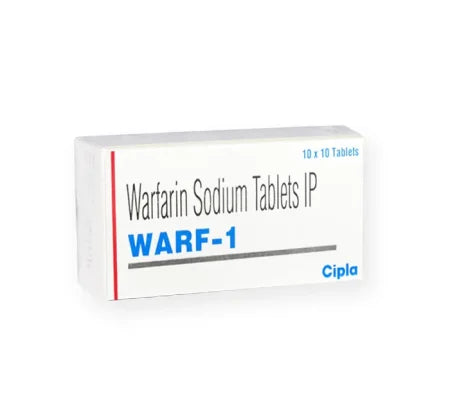
Warf 1 mg Tablet – Buy Online
Sale price
$34.00
90% Off
Regular price
$36.00
Understanding Warf 1 mg Warf 1 mg is a prescription medication used to reduce the risk of harmful blood clot formation. It contains Warfarin, an anticoagulant commonly referred to as
Rx – Prescription Required
Description
Reviews
Description
- Description
- Additional info
- Reviews
-
Helps prevent dangerous blood clot formation
-
Supports healthy blood circulation
-
Reduces the risk of clot-related complications
-
May lower stroke risk in eligible patients
-
Useful in managing DVT and pulmonary embolism
-
Allows flexible dose adjustment when needed
-
Can be incorporated into long-term treatment plans
-
Spinach
-
Kale
-
Broccoli
-
Brussels sprouts
-
Green leafy vegetables
-
Easy bruising
-
Minor bleeding
-
Nosebleeds
-
Bleeding gums
-
Mild nausea
-
Stomach discomfort
-
Unusual or severe bleeding
-
Blood in urine
-
Blood in stool
-
Vomiting blood
-
Severe headache
-
Sudden weakness or numbness
-
Unexplained swelling or pain
-
Liver disease
-
Kidney disorders
-
High blood pressure
-
Bleeding disorders
-
Recent surgery
-
History of stroke
-
Stomach ulcers
-
Aspirin
-
Certain antibiotics
-
Anti-inflammatory medications
-
Antifungal medicines
-
Thyroid medications
-
Herbal supplements such as ginseng or St. John's Wort
-
Individuals with active bleeding disorders
-
Patients with severe uncontrolled bleeding
-
People allergic to Warfarin or its ingredients
-
Individuals unable to undergo required monitoring
-
Patients with certain medical conditions as determined by a healthcare provider
Understanding Warf 1 mg
Warf 1 mg is a prescription medication used to reduce the risk of harmful blood clot formation. It contains Warfarin, an anticoagulant commonly referred to as a "blood thinner." Rather than actually thinning the blood, the medicine works by slowing the body's clotting process, helping blood flow more freely through the circulatory system.
Healthcare professionals may prescribe Warf 1 mg for individuals who have certain heart conditions, artificial heart valves, deep vein thrombosis (DVT), pulmonary embolism (PE), or other medical situations where preventing blood clots is important.
Active Ingredient
Generic Name: Warfarin Sodium
Strength: 1 mg
Drug Class: Anticoagulant (Vitamin K Antagonist)
Dosage Form: Oral Tablet
How Warf 1 mg Works
Blood clotting is a natural process that helps stop bleeding after an injury. However, when blood clots form unnecessarily inside blood vessels, they can create serious health complications.
Warf 1 mg works by interfering with the action of vitamin K, a nutrient required for the production of several clotting factors in the liver. By reducing the activity of these clotting factors, the medication decreases the blood's ability to form dangerous clots. This action helps lower the risk of clot-related conditions such as stroke, pulmonary embolism, and deep vein thrombosis.
Because its effect develops gradually, regular monitoring may be necessary to ensure the medication is working safely and effectively.
Medical Uses of Warf 1 mg
Warf 1 mg may be prescribed for various clot-prevention purposes, including:
Prevention of Deep Vein Thrombosis (DVT)
Helps reduce the risk of blood clots developing in the deep veins, particularly in the legs.
Management of Pulmonary Embolism
Used as part of treatment plans for blood clots that travel to the lungs.
Stroke Risk Reduction
May help decrease the risk of stroke in certain patients with conditions such as atrial fibrillation.
Artificial Heart Valve Support
Often prescribed to patients with mechanical heart valves to help prevent clot formation around the valve.
Long-Term Anticoagulation Therapy
Can be used for ongoing management in individuals who require long-term clot prevention.
Key Characteristics of Warf 1 mg
Low-Dose Strength
The 1 mg strength allows healthcare providers to make precise dosage adjustments based on individual treatment needs.
Established Anticoagulant Therapy
Warfarin has been used for decades in the management and prevention of blood clotting disorders.
Individualized Treatment
Dosage requirements vary significantly between patients and are adjusted according to blood test results.
Long-Term Management Option
Suitable for patients requiring ongoing anticoagulation under medical supervision.
Benefits of Warf 1 mg
How to Take Warf 1 mg
Take the tablet exactly as prescribed by your healthcare provider. It is generally recommended to take the medication at the same time each day to maintain consistent levels in the body.
The tablet may be taken with or without food. Swallow it whole with water and avoid changing the prescribed dose without consulting your doctor.
Because many factors can influence how Warfarin works, including diet and other medications, patients are often advised to attend regular follow-up appointments and blood tests.
Importance of INR Monitoring
One of the most important aspects of Warf 1 mg therapy is monitoring the International Normalized Ratio (INR).
The INR test measures how long it takes blood to clot and helps healthcare providers determine whether the medication dosage is appropriate. An INR that is too low may increase clotting risk, while an INR that is too high may increase bleeding risk.
Regular monitoring helps maintain the safest and most effective treatment balance.
Dietary Considerations
Certain foods rich in vitamin K may influence the effectiveness of Warfarin. Examples include:
Patients do not necessarily need to avoid these foods completely, but maintaining a consistent intake is often recommended to help stabilize treatment.
Always discuss dietary changes with a healthcare professional while taking Warf 1 mg.
Possible Side Effects
Like all medications, Warf 1 mg may cause side effects in some individuals.
Common Side Effects
Serious Side Effects
Seek immediate medical attention if you experience:
Prompt medical evaluation is important whenever abnormal bleeding occurs.
Precautions and Warnings
Before using Warf 1 mg, inform your healthcare provider if you have:
Additional caution may be required in elderly patients because they can be more sensitive to anticoagulant therapy.
Drug Interactions
Warfarin is known to interact with many prescription medications, over-the-counter drugs, and herbal supplements.
Examples include:
Because interactions can significantly affect clotting risk, patients should always inform healthcare providers about all medicines and supplements they use.
Storage Information
Store Warf 1 mg at room temperature in a dry place away from excessive heat and moisture. Keep the medication in its original packaging and out of reach of children and pets.
Avoid storing tablets in bathrooms or areas exposed to humidity.
Who Should Not Use Warf 1 mg?
This medication may not be suitable for:
A complete medical assessment is necessary before starting treatment.
Stay home & get your daily
needs from our shop
Start You'r Daily Shopping with Medsprimehub